Archived Terra Lectures in American Art
2025
Terra Lectures in American Art 2025 | Unsettled Ground
Prof Erin Pauwels, Terra Foundation Visiting Professor in American Art (2024-25)
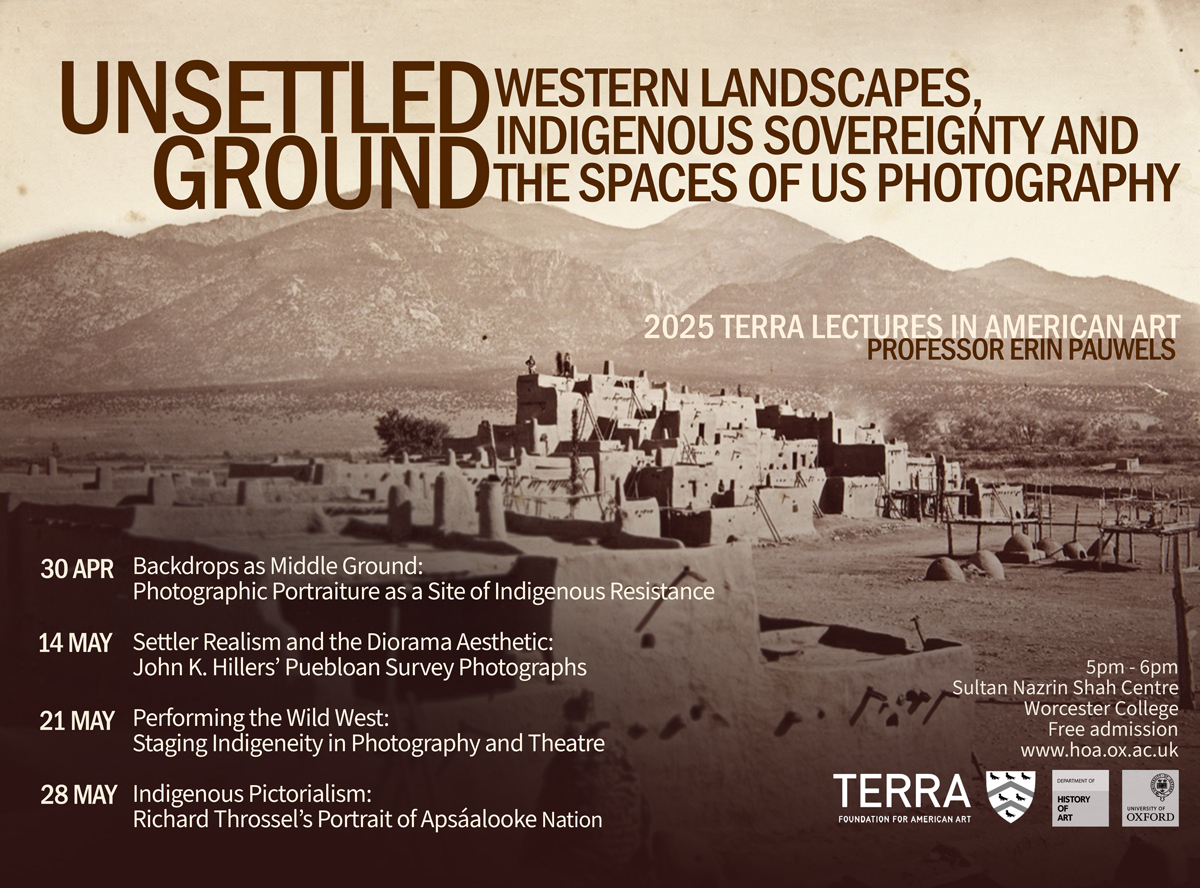
Backdrops as Middle Ground: Photographic Portraiture as a Site of Indigenous Resistance analyses the peculiar function of photographic backdrops in portraits of Indigenous leaders made during tribal delegation trips to Washington, DC during the 1860s and 1870s.
Wed 30 April 2025 Sultan Nazrin Shah Centre, Worcester College Backdrops as Middle Ground: Photographic Portraiture as a Site of Indigenous Resistance Prof Erin Pauwels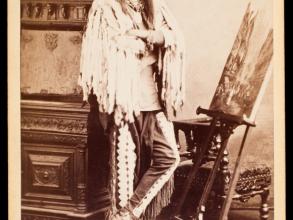
Settler Realism and the Diorama Aesthetic: John K. Hillers' Puebloan Survey Photographs examines photographs by John K. Hillers and paintings by Thomas Eakins to interrogate late 19th-century depictions of Puebloan cultures in the American Southwest.
Wed 14 May 2025 Sultan Nazrin Shah Centre, Worcester College Settler Realism and the Diorama Aesthetic: John K. Hillers' Puebloan Survey Photographs Prof Erin Pauwels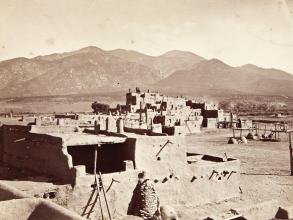
Image: John K. Hillers (US, born Germany 1843-1925) Taos Pueblo, 1879/81 Pitt Rivers Museum
Performing the Wild West: Staging Indigeneity in Photography and Theatre compares the settings of portraits depicting Lakota People by photographers Napoleon Sarony and Gertrude Käsebier with the theatrical sets used in the Buffalo Bill Wild West Show at the 1887 American Exhibition in London.
Wed 21 May 2025 Sultan Nazrin Shah Centre, Worcester College Performing the Wild West: Staging Indigeneity in Photography and Theatre Prof Erin Pauwels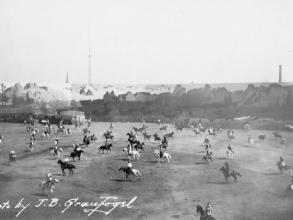
Image: J.B. Gracefogel Buffalo Bill Wild West Show Arena, 1916 McCracken Research Library, Buffalo Bill Center of the West
Indigenous Pictorialism: Richard Throssel's Portrait of Apsáalooke Nation explores how early 20th-century Indigenous photographer Richard Throssel subverted the pictorialist aesthetic used by contemporary commercial photographers of Indigenous People to create modern portraits of his adopted Apsáalooke (Crow) community.
Wed 28 May 2025 Sultan Nazrin Shah Centre, Worcester College Indigenous Pictorialism: Richard Throssel's Portrait of Apsáalooke Nation Prof Erin Pauwels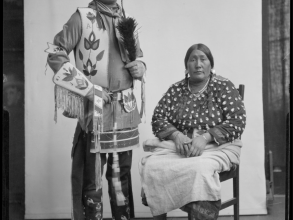
Terra Study Day 2025 | Borderzones: New Research and New Directions in the Art History of the Americas
Convened by Prof Erin Pauwels, Terra Foundation Visiting Professor in American Art (2024-25)
Tue 24 June 2025 | Rose Garden Room, Worcester College
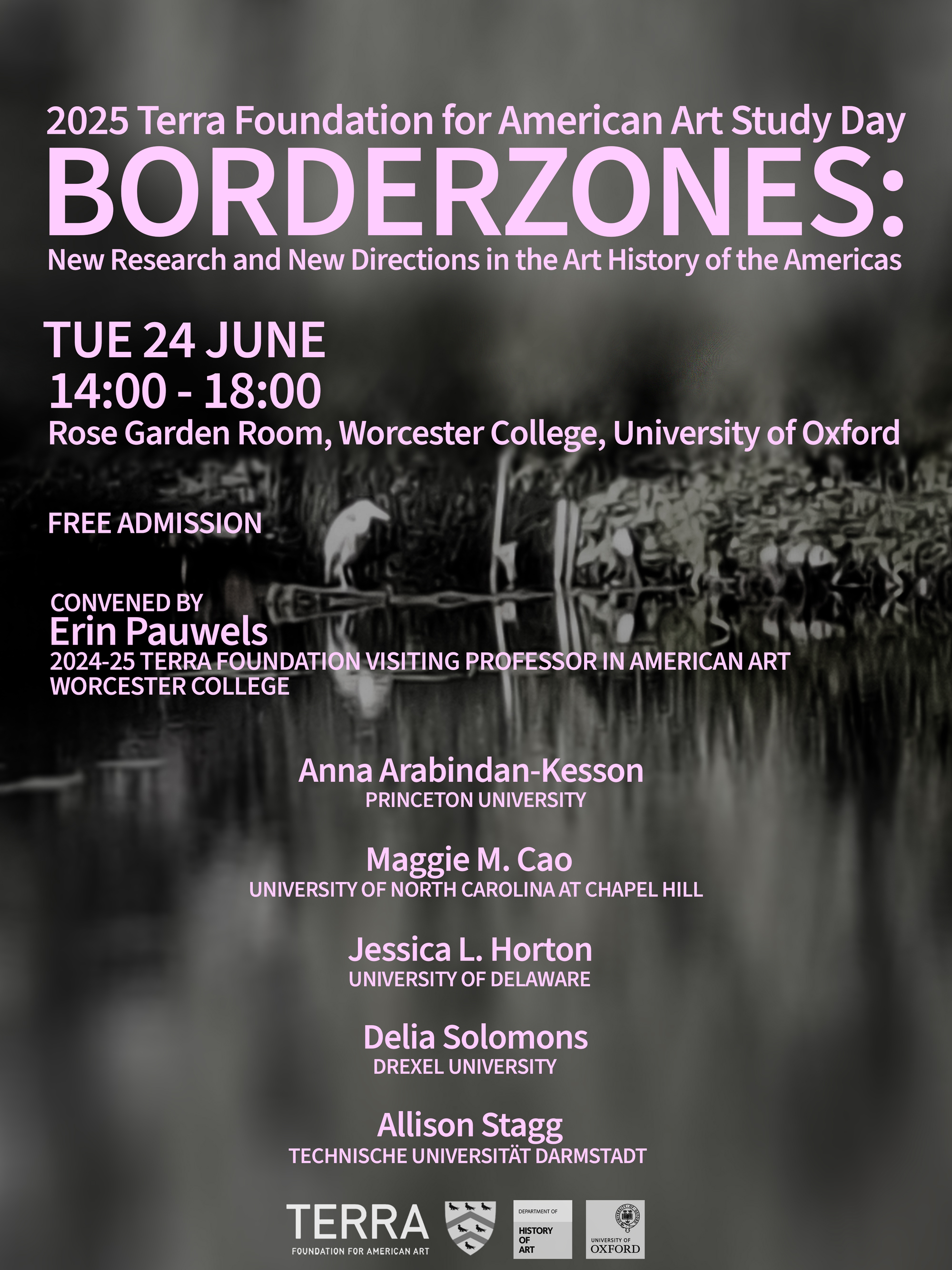
The 2025 Terra Foundation for American Art Study Day, titled BORDERZONES, convenes a group of leading scholars to assess the current state of the field for American art history and to chart new directions for its future. Through individual research presentations and a collaborative roundtable discussion, the event will explore evolving definitions of "American art," the critical frameworks that are expanding its scope, and the underrepresented histories that demand urgent scholarly attention. The theme of BORDERZONES underscores the intellectual challenges and pressing ethical stakes of reimagining visual culture in the Americas across cultural, political, and geographic divides.
Convenor:
Erin Pauwels 2024-25 Terra Foundation Visiting Professor in American Art, University of Oxford / Associate Professor of American Art, Temple University
Participants:
Anna Arabindan-Kesson Associate Professor of African American and Black Diasporic Art, Princeton University Maggie M. Cao Associate Professor of Art History and the David G. Frey Scholar in American Art, University of North Carolina at Chapel Hill Jessica L. Horton Associate Professor of Native American, Modern and Contemporary Art, University of Delaware Delia Solomons Associate Professor of Contemporary Art and Program Director of Art History, Drexel University Allison Stagg Researcher and Lecturer in Transatlantic art and visual culture, Technische Universität Darmstad
2024
Terra Lectures in American Art 2024 | The Politics of Place in American Art of the Vietnam Era
Dr Johanna Gosse, Terra Foundation Visiting Professor in American Art (2023-24)
Wed 8 May 2024 Sultan Nazrin Shah Centre, Worcester College American Ground: Edward Kienholz's The Non-War Memorial (1970) and the Inland Northwest Dr Johanna Gosse
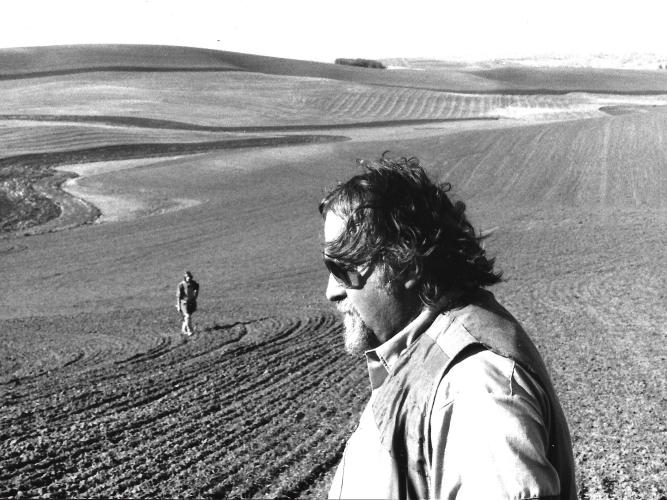
Edward Kienholz hunting on the Palouse (c. 1985). © Estate of Nancy Reddin Kienholz. Courtesy of L.A. Louver, Venice, CA.
Wed 15 May 2024 Sultan Nazrin Shah Centre, Worcester College American Sky: Robert Watts's Cloud Music (1974-79) and Urban Airspace Dr Johanna Gosse
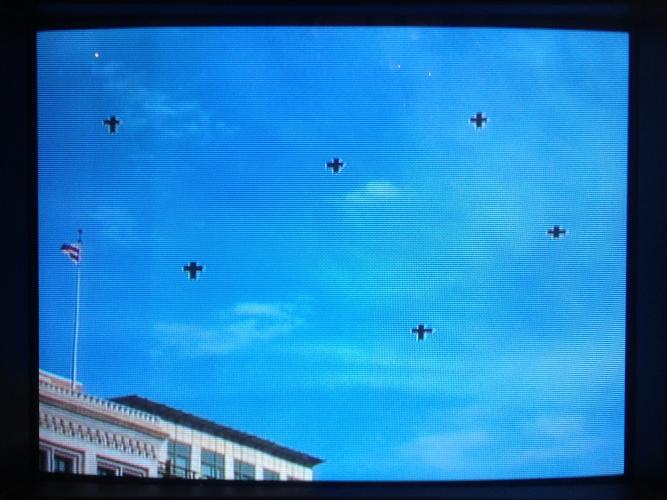
Image: Robert Watts, David Behrman, and Bob Diamond, Cloud Music (1974-1979). © Robert Watts Estate. Courtesy the Robert Watts Estate.
Wed 22 May 2024 Sultan Nazrin Shah Centre, Worcester College American Frontier: Bruce Conner's CROSSROADS (1976) and the Nuclear Pacific Dr Johanna Gosse
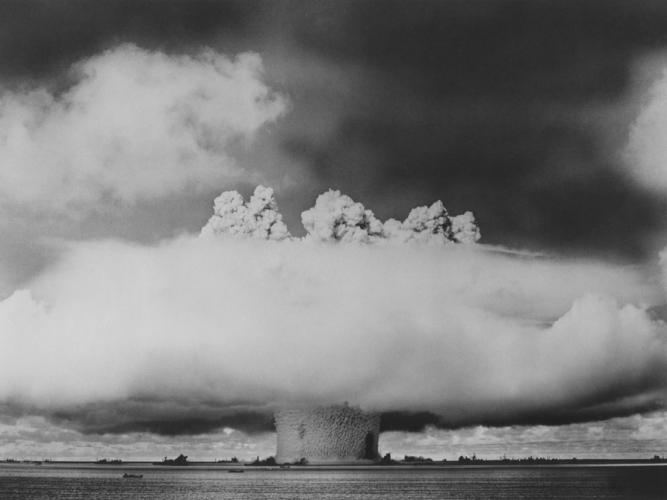
Image: Bruce Conner, CROSSROADS (1976). © Conner Family Trust. Courtesy of the Conner Family Trust.
Wed 29 May 2024 Sultan Nazrin Shah Centre, Worcester College American Utopia: John Cage's Lecture on the Weather (1976) and Bicentennial Aspiration Dr Johanna Gosse
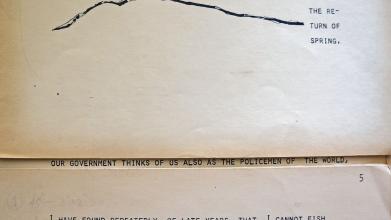
Image: John Cage, Lecture on the Weather (1976). © John Cage Trust. Courtesy of Frith Street Gallery, London.
2023
Terra Study Day 2023 | Materiality and the Senses: Beyond the Visual in Visual Culture
Convened by Prof Christopher Reed, Terra Foundation Visiting Professor in American Art (2022-23)
Fri 3 March 2023 | Linbury Building, Worcester College
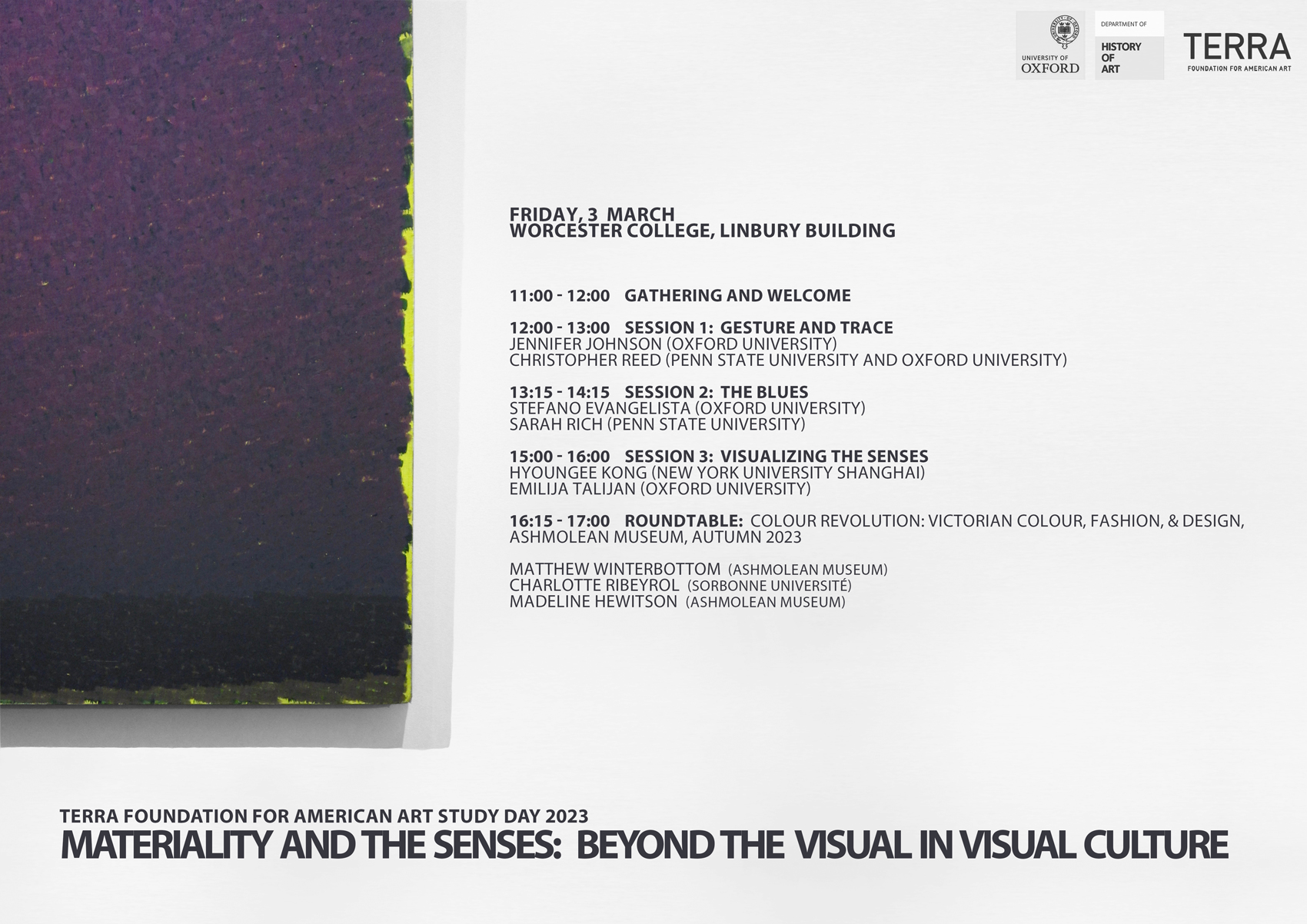
Terra Lectures in American Art 2023 | Made in Japan: American Identity and the Arts of the East
Prof Christopher Reed, Terra Foundation Visiting Professor in American Art (2022-23)
Wed 3 May 2023 Sultan Nazrin Shah Centre, Worcester College Brahmins in Boston: Positing an International Aristocracy Prof Christopher Reed This first lecture in a series exploring the ways Japanese aesthetics have been used to construct various forms of American identity looks at collectors, connoisseurs, and curators in Boston at the turn of last century. The acquisition and display of Japanese art at Boston's Museum of Fine Art reflected local anxieties over gender, ethnicity and class, provoking fantasies of affiliation with elite forms of Japanese masculinity. This local history has had global implications for perceptions of Japan and for conceptions of the role of museums in relation to civic identity.
Wed 10 May 2023 Linbury Building, Worcester College Whistler in Washington: Harmonies in East and West Prof Christopher Reed Following on the first lecture in this series, which analyzed the acquisition and display of Japanese art at the Museum of Fine Arts in turn-of-the-century Boston, this second lecture looks at the founding of the Freer Art Gallery, part of the Smithsonian Institution in Washington, D.C. Opened in 1923, the Freer juxtaposed Asian art with paintings by American artists, most prominently James Abbot McNeill Whistler, including his famous "Peacock Room." Visitors to the Freer were encouraged to compare the colors, forms, and textures of Asian art with recent American painting, shifting ideas of art from depiction to abstraction while transforming the dynamics of cross-cultural interaction from impersonation to emulation. The legacy of this collaboration between Freer and Whistler - both alienated and peripatetic - proposed a model of American modernism at once productive and troubling.
Wed 17 May 2023 Sultan Nazrin Shah Centre, Worcester College Post-war Publics: Highbrow v. Middlebrow Prof Christopher Reed The third lecture in this series turns to the years after World War II, and looks at the ways that attitudes toward modernist Japanese prints reflected social and geographic hierarchies in the United States. Highbrow tastes for traditional Japanese aesthetics cultivated by New York museums, such as the Museum of Modern Art, were contested by middlebrow interest in living Japanese artists through a series of print exhibitions staged by the Art Institute of Chicago. An ethos of middlebrow affiliation with Japanese aesthetics running back to Frank Lloyd Wright's development of "Prairie School" architecture underlies that championing of living Japanese artists personified most famously by the popular novelist James Michener, who wrote about, collected, and commissioned modernist Japanese prints. The conceptual focus here will be on ideas of kinesthetic empathy that connected middlebrow viewers to the innovative techniques of modernist printmakers at a moment when highbrow attention concentrated on the expressive gestures of Action Painting.
Wed 24 May 2023 Sultan Nazrin Shah Centre, Worcester College Incarceration and its Afterlives: Kinaesthetic Empathy Prof Christopher Reed The last of these lectures discusses the relationships between Japanese aesthetics and American identity begins from responses to the artwork created by Japanese Americans incarcerated during World War II, and extends to recent and current art created by American artists of Japanese descent, with particular attention to the work of Ruth Asawa and Jacob Hashimoto. Here the trajectory from impersonation, through emulation, to empathy will conclude with an analysis that brings together these three dynamics in a way that attempts to recognize the complexities in relationships of aesthetics and identity.
2022
Terra Lectures in American Art 2022 | Decolonising Art History through Latinx Art
Prof Charlene Villaseñor Black, Terra Foundation Visiting Professor in American Art (2021-22)
The 2022 Terra Lectures in American Art centre on Latinx art, with an emphasis on Chicanx (Mexican American) artists, and the theme of migration - of people, ideas, and artworks, from the seventeenth century to today. Art and activism converge as these lectures move across disciplinary, chronological, and geographical borders. We consider new approaches to "American" art, its borders, and contact zones. By posing strategic questions, these four talks demonstrate avenues of inquiry to decolonise art history. Professor Villaseñor Black is a world-renowned authority on the art of Central and South America in the early modern period, as well as of contemporary Latino/a art across the Americas. She currently chairs the César E. Chávez Department of Chicana/o and Central American Studies at the University of California, Los Angeles (UCLA), where she has been a full professor since 2014. As a scholar of the highest distinction, with impressive records of publication and grant capture, Professor Villaseñor Black brings to Oxford her research on the politics of religious art and global exchange. Actively engaged in the Chicana/o art scene, her upbringing as a working-class, Catholic Chicana from Arizona forged her identity as a border-crossing early modernist and inspirational teacher.
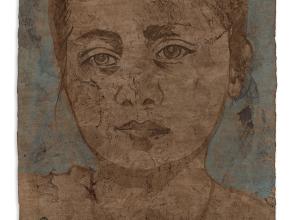
Sandy Rodriguez, Jakelin Amei Rosmery Caal Maquin (age 7), from You Will Not Be Forgotten, 2019 (private collection)
Mon 25 April 2022 Sultan Nazrin Shah Centre, Worcester College Art and Radical Hospitality Prof Charlene Villaseñor Black What is the role of art and artists in the face of human suffering? This lecture considers that question, focusing on Chicana (Mexican American) artist Sandy Rodriguez's 2019 installation You Will Not Be Forgotten. Dwelling on her series of seven portraits of Central American children who died in US Customs and Border Protection in 2018 and 2019, I contextualize her art in relation to global migration crises. Investigation of Rodriguez's work in relation to theories of memory, postmemory, and trauma elucidate the power of art to inspire empathy. How can art enact radical hospitality? Image: Sandy Rodriguez, Jakelin Amei Rosmery Caal Maquin (age 7), from You Will Not Be Forgotten, 2019 (private collection)
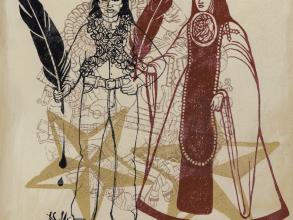
Alma López, La peor de todas, print, 2013 (courtesy of the artist)
Mon 9 May 2022 Sultan Nazrin Shah Centre, Worcester College Collapsing Time with Sor Juana Inés de la Cruz Prof Charlene Villaseñor Black
This lecture brings contemporary art by Chicana (Mexican American) women artists into dialogue with the seventeenth and eighteenth centuries, collapsing and questioning art history's chronological and geographical frameworks and borders. I examine portrayals of Sor Juana Inés de la Cruz (1648-1695), famed writer, intellectual, and proto-feminist nun in colonial Mexico. How can recent visual imaginings by Chicana feminist artists illuminate earlier, historical portrayals of Mexico's "Tenth Muse"? Can the tools of Chicanx studies force a reconceptualization of art history?
Image: Alma López, La peor de todas, print, 2013 (courtesy of the artist)
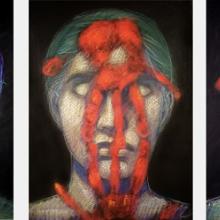
Judithe Hernández, The Weight of Silence, pastel mixed media on paper, 2008 (courtesy of the artist)
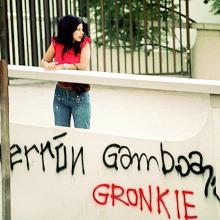
Asco, Spray Paint LACMA, chromogenic print by Harry Gamboa, Jr., 1972
Terra Study Day 2022 | Decolonising American Art
Online roundtable chaired by Prof Charlene Villaseñor Black, Terra Foundation Visiting Professor in American Art (2021-22)
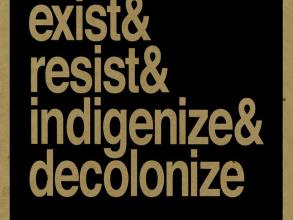
Thu 23 June 2022 (Online via Microsoft Teams) Decolonising American Art: Online Roundtable Event Chaired by Prof Charlene Villaseñor Black This roundtable addresses current issues in curating and exhibiting "American" art. What are the various challenges? What strategies can we use to diversify American art, more fully recognizing art produced by various minoritized communities? What are the advantages of a hemispheric approach that situates American art within the wider context of the Americas? How should we approach chronology or temporality? Can we decolonize the exhibition of American art? _______________________________________________________________ Panel 1: Minoritized Voices Decolonizing American Art Cecilia Fajardo-Hill, Independent Curator Renya Ramirez, Professor, University of California, Santa Cruz Brisa Smith Flores, Doctoral Candidate, University of California, Los Angeles Panel 2: Gender and Decolonizing American Art Ondine Chavoya, Williams College, Loughborough University Hilary Robinson Guisela Latorre Panel 3: Decolonizing American Art: Hemispheric and Temporal Challenges Charlene Villaseñor Black Mari-Tere Álvarez _________________________________________________________________
2021
Terra Lectures in American Art 2021 | Performing Innocence: US Artists in Paris, 1865-1914
Prof Emily C Burns, Terra Foundation Visiting Professor in American Art (2020-21)
Between the end of the US Civil War and the start of World War I, thousands of American artists studied and worked in Paris. While popular thought holds that they went to imbibe culture and attain artistic maturity, in this four-part lecture series, Professor Emily Burns explores the various ways that Americans in Paris performed instead a cultural immaturity that pandered to European expectations that the United States lacked history, tradition, and culture. The lectures chart knowing constructions of innocence that US artists and writers projected abroad in both art practice and social performance, linking them to ongoing conversations about race, gender, art making, modernity, physio-psychological experience, evolutionary theory, and national identity in France and in the United States. Interwoven myths in art and social practice that framed Puritanism; an ironically long-standing penchant for anything new and original; primitivism designed by white artists' playing with ideas of Blackness and Indigeneity; childhood's incisive perception; and originary sight operated in tandem to turn a liability of lacking culture into an asset. In analyzing the mechanisms of these constructions, the lectures return to the question about the cultural work these ideas enacted when performed abroad. What is obscured and repressed by mythical innocence and feigned forgetting?
Emily C Burns is an Associate Professor of Art History at Auburn University where she teaches courses on eighteenth- and nineteenth-century American, Native American, and European art history. Her publications include a book, Transnational Frontiers: the American West in France (University of Oklahoma Press, 2018), which analyzes appropriations of the American West in France in performance and visual and material culture in the tripartite international relationships between the United States, France, and the Lakota nation between 1867 and 1914, as well as journal articles, exhibition catalogue essays, and book chapters related to art and circulation, US artists in France, and American impressionism. She is currently completing a co-edited volume with Alice Price on global impressionisms entitled Mapping Impressionist Painting in Transnational Contexts (forthcoming from Routledge).
During her tenure as the Terra Foundation for American Art Visiting Professor in the Department of History of Art at the University of Oxford and a Visiting Fellow at Worcester College, Professor Burns will complete her second book, Performing Innocence: Cultural Belatedness and U.S. Art in fin-de-siècle Paris.
Wed 17 February 2021 Performing Innocence: Belated Prof Emily C Burns Moderator: Peter Gibian, Associate Professor of English, McGill University Why did terms like innocence, naïveté, and artlessness have currency for US artists working in fin-de-siècle Paris? This lecture examines the language employed by artists and critics that applied these terms to Franco-American art exchange. Professor Burns traces the concepts' emergence and expansion at the end of the US Civil War. Linking the mass exodus to France for study to attempts at cultural rejuvenation, innocence reveals a culture triggered by the realities of war, failed Reconstruction, divisive financial interests, and imperial ambition. The impossibility of innocence gave the myth its urgency and paradox. Engaging with artists from Thomas Eakins and Robert Henri to writers Mark Twain, Henry James and Edith Wharton, as well as journalists, the lecture frames the definitions and stakes of claiming to be innocent and naïve in Paris. In performing these characteristics, these artists and writers built an idea that American culture was belated compared with Europe; the lecture contextualizes this idea of strategic belatedness alongside similar projections in other emergent national contexts.
Wed 24 February 2021 Performing Innocence: Puritan Prof Emily C Burns Moderator: Wanda M. Corn, Robert and Ruth Halperin Professor Emerita in Art History, Stanford University Visual culture representing Americans in Paris often polarized stereotypes of French and US identities, framing French bohemia as distinct from steadfast US work ethic. This lecture analyzes how Americans and US institutions in Paris adopted the ideal of the Puritan as a symbol of their sustained connection with the United States and a protective armor from becoming absorbed into Parisian decadence. US churches in Paris-all Protestant-participated in this construction alongside offering critiques of Catholicism in the context of debates about laicization in France. Professor Burns analyzes paintings, sculpture, and illustrations by Julius LeBlanc Stewart, Cecilia Beaux, Augustus St. Gaudens, and Jean André Castaigne, and studies St. Luke's Chapel, which was built for the US students in Paris, to argue that this discourse inflected US artists' representations of their studio spaces; the rhetoric of US artists' clubs in Paris; and limited professional possibilities for US women artists.
Wed 3 March 2021 Performing Innocence: Primitive / Incipient Prof Emily C Burns Moderator: James Smalls, Professor and Chair, Department of Visual Arts at the University of California, Los Angeles Projections of different ideas of innocence became entangled in the representation of Black US character in fin-de-siècle Paris. By pairing new research on blackface minstrelsy and painter Henry Ossawa Tanner in the American Art Association of Paris with the displays of Blackness curated by Black intellectuals in the "Exhibit of American Negroes" in the Paris Universal Exposition of 1900, Professor Burns argues thatAmerican minstrelsy in Paris built a racialized "primitive" identity that caricatured Black men as effeminate and emasculated, while the latter exhibit constructed innocence grounded in claims of youth, newness, and incipient culture. While the curators staunchly and effectively rejected narratives of primitivism, these tropes of the new simultaneously paralleled and reinforced performances of cultural innocence in the largely white US community in Paris.
Wed 10 March 2021 Performing Innocence: Baby Nation Moderator: Prof Alastair Wright, University of Oxford French artists often referred to US artists and art as their offspring. In the context of French declining birthrates, cultural fecundity absorbed anxieties about a decline of French culture. The final lecture analyzes how US artists in Paris took up the child as a motif and mantra that reinforced or rejected the narrative of French artistic parentage. While Edwin Blashfield and Henry Ossawa Tanner, both artists invested in the French academy system, framed dutiful tutelage, Mary Cassatt, Cecilia Beaux, and Ellen Emmet Rand instead probed burgeoning ideas in psychology about the child to frame independent and precocious children. These modern children modeled artistic independence echoed in these painters' aesthetic experimentation, mirroring the conceit framed by Henry James's depiction of his child character inWhat Maisie Knewas "flattening her nose upon the hard window-pane of the sweet-shop of knowledge." Cartoons related to the War of 1898 suggest the fungible nature of this position; while playing youthful in the context of Europe, Americans adopted the aged Uncle Sam in rendering their colonized subjects as the children as they moved to outgrow their longstanding dependence on Parisian art practice.
2020
Terra Lectures in American Art 2020 | Regarding the Portrait
Prof Amy M Mooney, Terra Foundation Visiting Professor in American Art (2019-20)
In this four-part lecture series, Professor Amy M Mooney examines the central role portraiture played in fostering social change in the United States from the 1890s through the 1950s. Drawing from her forthcoming book, Portraits of Noteworthy Character, Professor Mooney considers the strategic visual campaigns generated by individuals and social institutions that used the portrait to advance their progressive political ideologies. From the etiquette texts used at historically black colleges to the post cards produced by Hull-House to the Harmon Foundation's exhibition of "Portraits of Outstanding Americans of Negro Origin," these lectures explore the ways in which the portrait was employed to build social relationships and negotiate modern subjectivity. Professor Amy M Mooney's research focuses on African American art and visual culture. She comes to Oxford from Columbia College Chicago, where she is an Associate Professor of Art History and Visual Culture. Her publications include a monograph on the Chicago painter Archibald J. Motley, Jr. (2004) and contributions to anthologies and catalogues including Beyond Face: New Perspectives in Portraiture (2018), Archibald Motley: Jazz Age Modernist (2014), and Romare Bearden in the Modernist Tradition (2009). She has been awarded fellowships by the American Council of Learned Societies, the Black Metropolis Research Consortium with the Andrew Mellon Foundation, the Joyce Foundation, the National Portrait Gallery, the Smithsonian American Art Museum, and the Terra Foundation for American Art. In collaboration with photography historian Dr Deborah Willis and the Museum of Contemporary Photography at Columbia College Chicago, she recently launched a Digital Humanities project entitled "Say It with Pictures" Then and Now that recovers and critically examines the work of Chicago's African American photographers from the 1890s into the 1930s. As part of the Terra Foundation's Art Design Chicago initiative, this project will generate an exhibition and catalogue that brings to light Chicago's contributions to the formation of modern black subjectivities.
Mon 25 May 2020 Regarding the Portrait: The Primers Prof Amy M Mooney Moderator: Prof Alastair Wright, University of Oxford This lecture examines the factors that influenced the development of pedagogical strategies for reading and realizing the portrait as conceived for students at Historically Black Colleges and Universities during the post-bellum era. Through engravings illustrating etiquette books and early photography, Professor Mooney traces the precedents for the ideological situating of black subjectivity within the politics of respectability that later inform the rhetorical trope of the New Negro.
Mon 1 June 2020 Regarding the Portrait: The Photographers Prof Amy M Mooney Moderator: Prof Deborah Willis, Department of Photography & Imaging at the Tisch School of the Arts, New York University Through the advancements in technology and printing, photography becomes the most accessible form through which individuals could determine how they wanted to be seen. The burgeoning black media ensured the publication and circulation of photographic portraits, as well as the development of a modern criticality through the act of representation. In this lecture, Professor Mooney explores how, in collaboration with their patrons, African American commercial photographers generated a body politic that fostered racial equality through portraiture.
Mon 8 June 2020 Regarding the Portrait: The Progressives Prof Amy M Mooney Moderator: Melanie Chambliss, Assistant Professor in the Humanities, History, and Social Sciences, Columbia College Chicago At the turn of the twentieth century, U.S. national consciousness was challenged by both migration and immigration. White progressives, such as Jane Addams, sought to improve the conditions of newly arrived immigrants and borrowed strategies for racial, adapting them to encourage assimilation. Looking at images generated by Joseph Stella, Norah Hamilton and Lewis Hine, Professor Mooney considers how portraits from the progressive era contributed to the emerging constructs of race and ethnicity across the color line.
Mon 15 June 2020 Regarding the Portrait: The Pragmatists Prof Amy M Mooney Moderator: Prof Geoffrey Batchen, University of Oxford The final lecture examines an exhibition generated by the Harmon Foundation in 1944 called "Portraits of Outstanding Americans of Negro Origin." This group of commissioned portraits toured the US for nearly ten years with the intention of not only celebrating the contributions of successful African Americans, but also modeling social integration and the possibilities of civil rights. Considering the aesthetics and logistics of the exhibition, Professor Mooney explores the ways in which the philosophies of Alain Locke informed the unabating optimism that portraiture could generate social change.